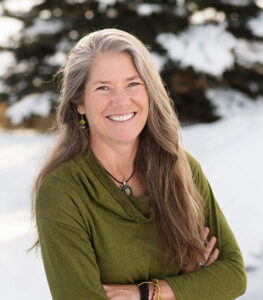
Holly Fretwell is president of Montana Connections, LLC where she does economic conservation consulting and hospitality management, is co-owner of the Jammin Jackalope camping and cabins, and is a research fellow at PERC, the Property and Environment Research Center. For nearly three decades Fretwell’s research has focused on public lands policy, private conservation, property rights, and markets. Her passion is helping others understand how free markets and trade can help enhance conservation and environmental quality.
Fretwell holds a bachelor’s degree in political science and a master’s degree in resource economics from Montana State University. An educator at heart, Fretwell taught economics at Montana State University for 15 years, provided tools and curriculum for high school teachers to motivate economic thinkers, and has authored two books.
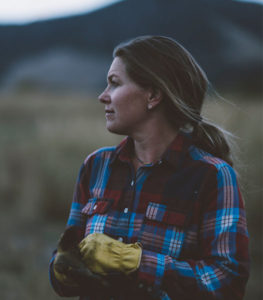
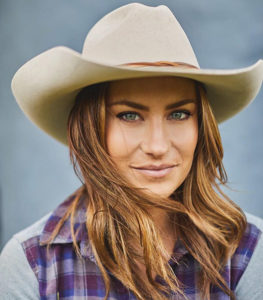
Malou Anderson-Ramierz resides on her family ranch in Tom Miner Basin, Montana, where she and her husband Dre live and work while raising their two daughters, Esme and Hasell. Aside from working on the ranch and learning about holistic management systems, she has psychology, social work, and equine-assisted therapies background. Malou enjoys working in community-building and land-based practices. Helping people and communities reconnect to themselves through restoring landscapes, coexisting with wildlife, and creating strong and thriving communities for both human and the more-than-human. When she’s not on the ranch or tending to kiddos, animals, or listening to lands, she loves exploring newfound communities- both urban and rural, reading, riding her horse, and sitting next to the ocean.
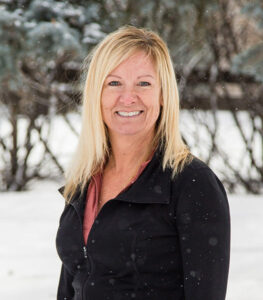
Holly Stoltz’s greatest passion has always been helping people in the agricultural community. Throughout her career, she has revitalized a small-town newspaper, promoted businesses and organizations with her screen printing and embroidery business, actively mentored area business start-ups, and supported the 4-H program as club organization leader and activist.
Montana ranch-raised and marrying into a family ranch, agriculture has always been a part of her life. Because of this, her degree in marketing, writing experience, and seeing the need to shift away from traditional ag practices, Holly has become a vocal supporter of regenerative agriculture as the only way to secure this legacy for future generations.
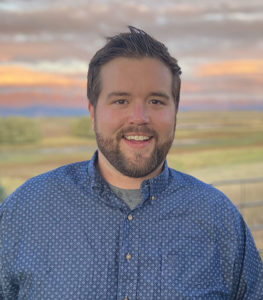
Colin McClure is a proud Bobcat Fan and a 3rd generation graduate from Montana State University in Soil and Water Science. As a 4th generation Montana descendant with ties to active farming and ranching operations in the Flathead as well as central Montana, Colin was raised in and around agriculture. Colin is strongly rooted in both traditional and regenerative agricultural practices focusing on improving the livelihood of all Montanans.
TBD
Roger Indreland, together with his wife Betsy, own and manages Indreland Angus, north of Big Timber, Montana. Roger is a third-generation rancher with a Farm & Ranch Management degree from Montana State University and forty-four years in the registered Angus business. Roger has found his niche in the grass-fed bull business, hosting an annual bull sale each December.
For over thirty years, Roger and Betsy have regenerated the landscape by placing value in building soil health and increasing biodiversity to complement Mother Nature’s system. As Roger says, “Our soil is the key to our success, so decisions are made with that in mind.”
In 2020, the Sweet Grass Chamber of Commerce honored them as “Ag Persons of the Year” and were nominated in 2021 as “Tow Rope Heroes” by the Northern Ag Network
Brittany Masters is the co-founder of Go Roam Free, a regenerative bison ranch and food business. As a first-generation rancher, Brittany brings her brand marketing and strong business sense to the world of sustainable animal agriculture. Brittany is passionate about developing brands and premium health products. Brittany spent 9 years as a Marketing Director at the Boeing Company, where she focused on reviving the Boeing brand and serving as a brand consultant to airline customers. During that time, she launched a startup food brand in the Middle East and finished her MBA at Seattle Pacific University. As WSE’s Secretary, Brittany hopes to help family-scale ranches transition to regenerative agriculture while improving their profitability in order to preserve the best of the west.
Dylan Hoffman is the Director of Sustainability for Yellowstone National Park Lodges. He oversees park-wide environmental efforts, compliance issues, and programs to curb the park’s contribution to climate change. In addition to his passion for helping to protect our environment, Dylan enjoys recreating in the greater Yellowstone ecosystem – including floating our local rivers, Nordic and backcountry skiing, hunting, or waving around a fly rod. Dylan lives in Gardiner, MT, with his partner, Erin, and their two little girls, Steely and Merrick.
Andrew Anderson is originally from Tom Miner Basin, where his family ranch is located. Currently, he manages J Bar L Ranches in the Centennial Valley and Melville, MT. His wife Hilary and four children have worked on the J Bar L for 13 years, helping to manage cow/calf, yearling, and grass-fed beef enterprises. They feel incredibly fortunate to ranch in wild and complex ecosystems and continually strive to learn how to preserve these unique places’ health, diversity, and integrity.
Carrie Balkcom is the Executive Director of the American Grassfed Association. AGA is the National multi-species entity organized to protect and promote Grassfed and pasture-based farmers and ranchers.
AGA is the leader in pasture-based production and the oldest grass-fed certification in the United States. AGA certifies ruminants and dairy. Carrie grew up on a Florida cattle ranch and has stayed connected to the agriculture and livestock industry. She has spoken, presented, or coordinated numerous regional and national conferences; and is well known in agricultural, culinary, and sustainable agricultural circles.
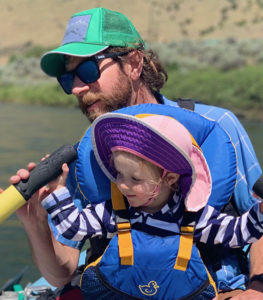
Rebecca Kurnick is a research scientist at Edaphix where she works to support healthy landscapes by mitigating undesirable species from a soil health lens. She has a background in local food systems and degrees in Soil Science and Agricultural Education from MSU. Rebecca discovered her passion for healthy soil and working landscapes through her work on farms and ranches in Maine and Montana. She enjoys helping people understand why it’s important to support the farmers and ranchers who contribute to functioning ecosystems. Rebecca and her husband Ryan enjoy hauling their two young children around the mountains on rafts, bikes, and skis teaching them about the places they love.
Dr. Joel Henry enjoys the complexity at the intersection of law, business, and technology, given he earned two computer science degrees from Montana State University, a Ph.D. in computer science from Virginia Tech, a J.D. at the University of Montana, and started his own software company.
Joel is one of a handful of people in the US with both a PhD in computer science and a JD. He is one of the leading experts in Montana, and nationwide, on cryptocurrency and blockchain technology law. A significant area of his practice also includes complex, cutting-edge legal matters around new technologies, including artificial intelligence, GDPR, and other data privacy laws, IT security, and data breaches. He also serves as an expert witness on litigation matters involving technology issues, electronic discovery, and digital forensics.
In his free time, Joel enjoys brewing beer, casting flies, tracking elk, floating rivers, backpacking, and hiking, but only when he isn’t spending time with his family.
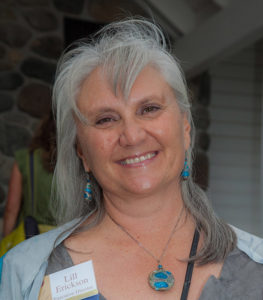
Lill Erickson has deep conviction to protect the incomparable landscape, wildlife, and way of life of the rural West, especially Montana. In 1994 Lill founded Western Sustainability Exchange to do just that. Leading up to it’s conception, Lill was an organizer for conservation nonprofits throughout the west, caretaker of a cattle ranch bordering Yellowstone National Park, and an advisor to a national committee to craft a strategy to promote agricultural sustainability.
These experiences gave her the prowess to implement regenerative agriculture practices and develop market-based conservation strategies to ensure a healthy, long standing, and profitable relationship between nature and innovative land stewards.
Lill loves her community of Livingston, spending as much time as work allows adventuring with friends in nature, and caring for and cavorting with her two dogs and two cats.
Lauren Dillon received her B.S. in Visual Communications from the University of California, Davis. Lauren became passionate about working with missional companies that dared to challenge the status quo after a few years spent working for Patagonia. In 2012 Lauren seized an opportunity to move to Wyoming and consequently spent eight years working seasonally across the West as a photographer–each year becoming more interested in the intersection of ranching and conservation. Lauren made her way to Montana in 2017 to manage the guest program at J Bar L Ranch–a regenerative, grass-fed beef operation and one of WSE’s partners–where she quickly became fascinated by learning about soil health ranch’s land management and conservation projects. Lauren is excited to continue supporting land stewardship and regenerative producers through her work on the Communications and Farmers’ Market teams.
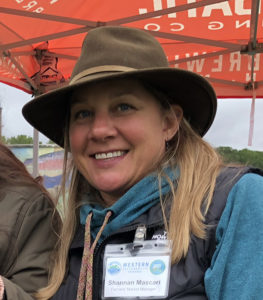
Shannan Mascari joined the Western Sustainability Exchange (WSE) team in 2019 as Office Administrator and Farmers Market Manager. Mascari attended Chico State University in Chico, California prior to moving to Montana in 1996. Upon moving here, she became a certified nursing assistant, caring for the elderly, before moving on to an administrative position with a wetlands restoration company. There, her hard work and dedication earned her the title of Vice President of Operations. She has over 18 years of administrative and managerial experience.
Mascari’s passion for taking care of the planet and the people who inhabit it is a perfect fit for WSE and the Farmers Market program. She and her husband, Jason, have three children and can often be found at soccer games, enjoying the great outdoors, or simply relaxing at their home on the Yellowstone River.
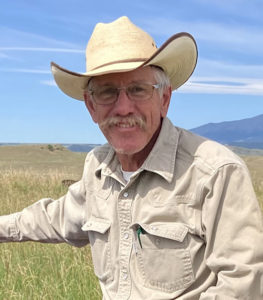
Chris Mehus, born, raised, and educated in Montana, has always maintained a joint passion for agriculture and the outdoors. He has applied his degrees in Wildlife Biology and Range Science to assist and advocate for ranchers who have a strong conservation ethic. After 10 years of direct ranching in Southern Montana putting his education to practice in numerous areas of grazing management and planning, Chris spent many years working in rural business, economic, and financial planning giving him unique insight into the workings of a ranch business to understand economic drivers and incentives that make ranching with nature a more profitable operating model than typical conventional practices. He is an outspoken advocate for the Ranching For Profit, Integrity Soils, Holistic Management International, and related schools of thought and how they can be applied to create a thriving ranch business while creating healthy, functioning ecological systems with rich soil and diverse wildlife populations.
Alex Blake is a regenerative rancher from Big Timber and a producer coordinator for WSE. He lives and works on the ranch and tree nursery his parents started in 1973 on a foundation of deep appreciation for the natural environment. Alex holds a Master’s in Agribusiness from Texas A&M University but has gotten most of his agrarian education from hands-on experience on farms and ranches in places as diverse as Kenya and Argentina. He enjoys being a part of the progressive rancher support network in south-central Montana and draws inspiration from those who are constantly challenging old ranching paradigms. He was an artillery Captain in the United States Marine Corps and is a proud husband and father to a two-year-old daughter.
Mark Ledger has been a member of the board since 2005, having served as Chair twice during that time. Professionally, Mark’s career has involved international finance, business counseling and private equity. Having spent all of his high school summers as a hand on a family cattle ranch in Big Timber, he has long standing ties in the area and retains a personal interest in agricultural and environmental sustainability. Mark serves on the boards of multiple non-profits, including land trusts, inner-city homelessness, urban micro-finance and a foundation dedicated to underserved populations. He and his wife, Ann, live in Pennsylvania and have two children and four grandsons.
Matt Skoglund is the founder and owner of North Bridger Bison, a bison ranch rooted in Regenerative Agriculture principles located in Montana’s Shields Valley. Prior to starting North Bridger Bison, Matt was the Director of the Northern Rockies Office for the Natural Resources Defense Council, where he worked on various conservation issues in Montana and the Northern Rockies for a decade. Matt is a graduate of Middlebury College and the University of Illinois College of Law. He is passionate about food and ranching, and he loves to hunt, garden, cook, and forage for morel mushrooms in the spring. Matt and his wife, Sarah, have two young kids, Otto and Greta.
Lauren Dillon received her B.S. in Visual Communications from the University of California, Davis. Lauren became passionate about working with missional companies that dared to challenge the status quo after a few years spent working for Patagonia. In 2012 Lauren seized an opportunity to move to Wyoming and consequently spent eight years working seasonally across the West as a photographer–each year becoming more interested in the intersection of ranching and conservation. Lauren made her way to Montana in 2017 to manage the guest program at J Bar L Ranch–a regenerative, grass-fed beef operation and one of WSE’s partners–where she quickly became fascinated by learning about soil health ranch’s land management and conservation projects. Lauren is excited to continue supporting land stewardship and regenerative producers through her work on the Communications and Farmers’ Market teams.
Tyrrell Hibbard enjoyed an upbringing in agriculture and conservation and today serves as a producer coordinator and senior advisor for WSE. Tyrrell is a rancher by day and distiller by night. He manages a seasonal custom grazing operation on his family’s multi-generational ranchland on the Continental Divide west of Helena. He also owns and operates Gulch Distillers in downtown Helena, producing award-winning spirits from Montana grains and fruits. When not actively engaged in agriculture or adding value to agricultural products, Tyrrell pursues conservation goals through WSE and Prickly Pear Land Trust. He serves on the board of directors. Tyrrell earned his bachelor’s degree in English from Duke University. He lives in Helena with his wife and two daughters.